
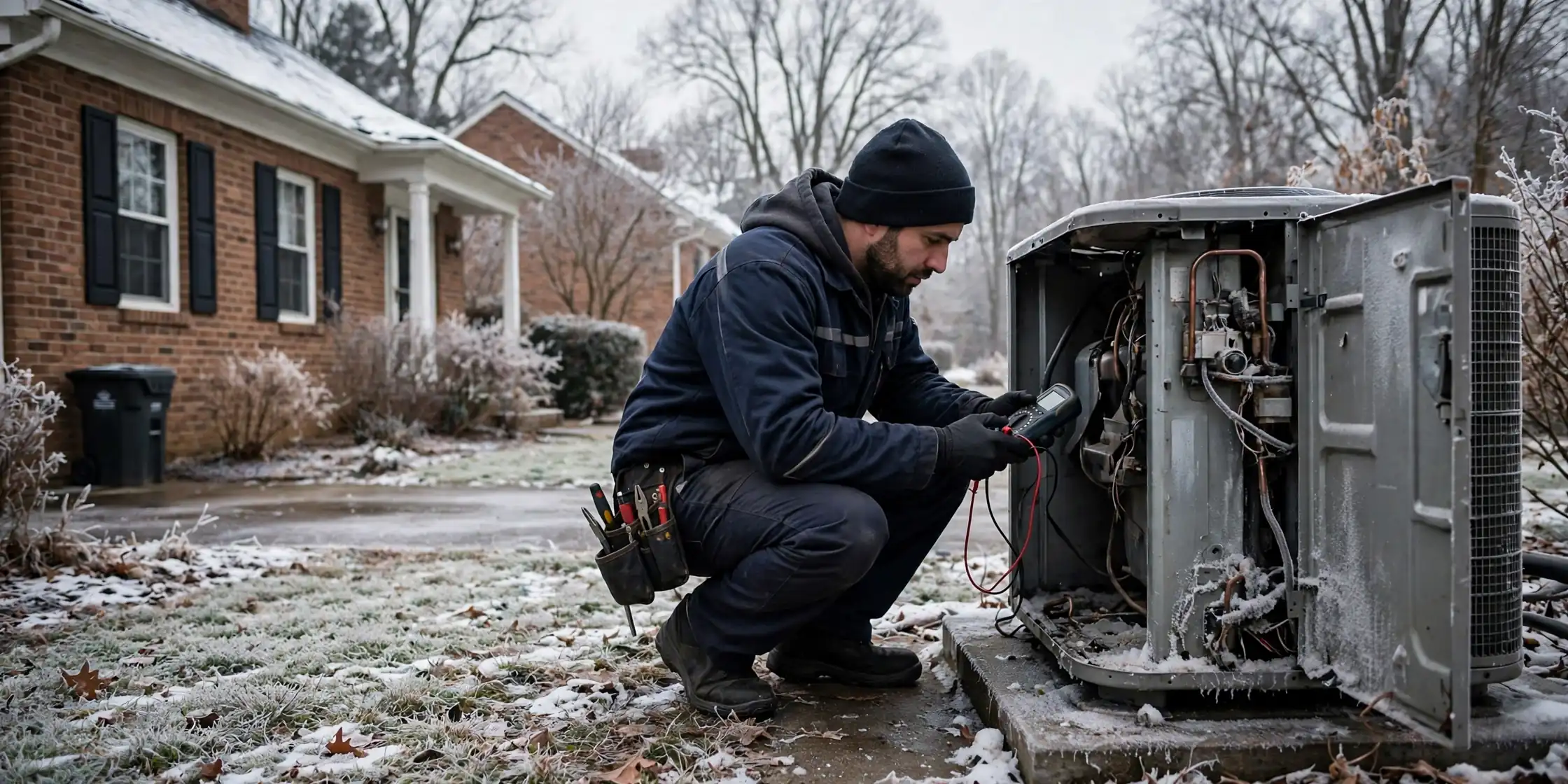
Heat Pump Repair in Lubbock, TX
Cold air in a Lubbock winter, warm air in a Lubbock summer, or a frozen outdoor unit. Call and describe what yours is doing.
- ✓Call direct, no forms to fill
- ✓Written price before work begins
- ✓Serving Lubbock, Wolfforth & Slaton
SYMPTOMS
Does your heat pump need repair?
We repair heat pumps in Lubbock homes. A heat pump moves heat instead of making it by burning fuel, so one system heats in winter and cools in summer. The air from the vents feels warm rather than hot, and that is normal. If the air feels cold in winter, warm in summer, or the house never reaches the thermostat setting, the system needs a look. That is what heat pump repair Lubbock TX covers: find the fault, explain it in plain words, and give you the repair price in writing before work starts.
What this page adds: what is normal and what is a fault. Defrost versus a real fault, and aux heat that keeps turning on, with the safe checks and the stop points.
- What is not normal is air that feels cold, or auxiliary heat that stays on in mild weather.
- A heat pump that runs long and steady in a Lubbock winter can still be fine.
- Lubbock has about 61 nights a year at or below freezing, and design heating sits around 15 to 19 degrees Fahrenheit.
- Heat pumps are present in Lubbock homes alongside the more common central air conditioner and gas furnace pairing.
- In summer the same system cools like an air conditioner. Our page on AC repair in Lubbock covers the cooling side of that symptom.
NORMAL OR FAULT
What is normal, and what is a fault?
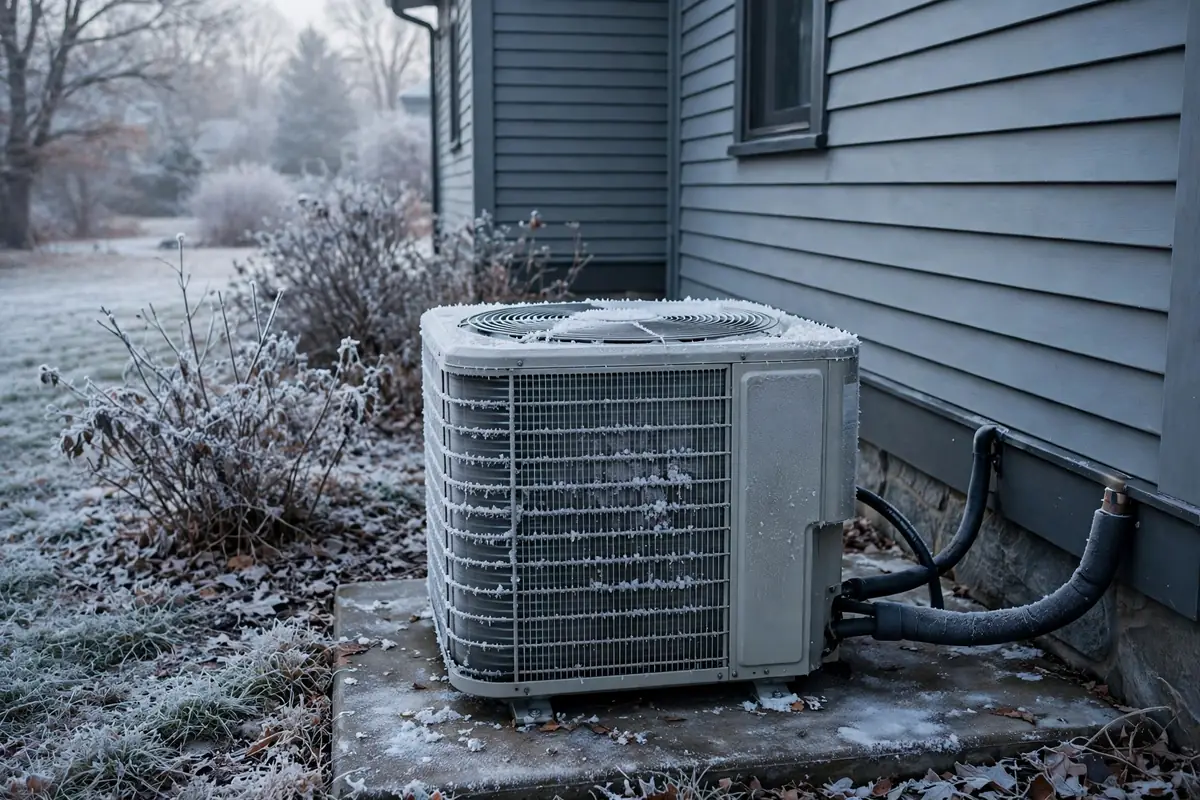
Some of what looks like a fault is the heat pump doing its job. In cold weather the outdoor coil frosts up, and the heat pump briefly reverses to melt it off. That is the defrost cycle. During those few minutes the air can feel cool, and you may see steam rising from the outdoor unit. Steam is normal. Smoke with a burning smell is not.
- Normal: a light frost that clears on its own, steam during defrost, and cool air for a few minutes only.
- Fault: the outdoor unit caked in ice with the fan unable to turn.
- Fault: cold air from the vents that lasts well past a defrost cycle.
- Fault: the house never reaches the thermostat setting, even after the system has run for hours.
- Fault: the system switching to auxiliary heat on a mild evening, when the heat pump should cope alone.
- When the cause is not clear, a technician checks the defrost control, the refrigerant charge, and the reversing valve.
AUXILIARY HEAT
What is auxiliary heat, and why does it keep turning on?
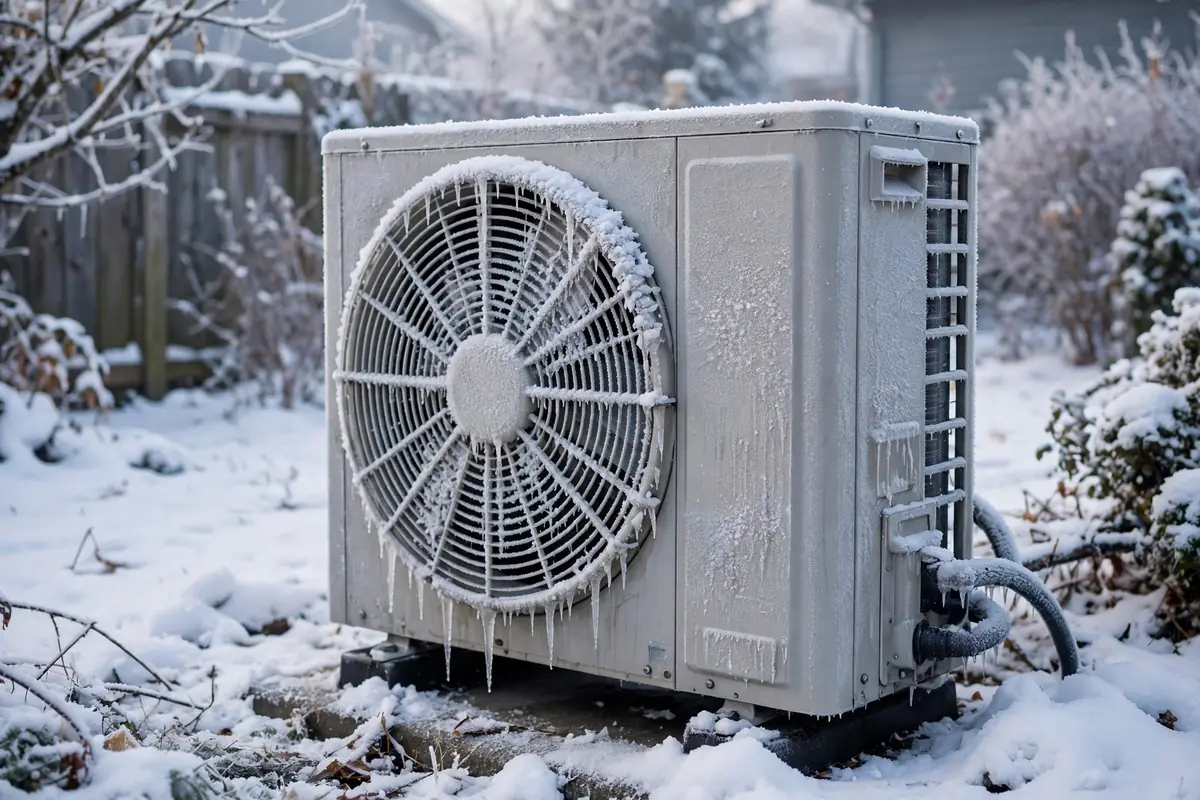
Auxiliary heat is electric resistance heat inside the air handler. It helps in two situations: below the balance point, where the heat pump alone can no longer keep up, and during a defrost cycle, when the heat pump briefly cools the house while it melts frost off the outdoor coil.
- Auxiliary heat costs more to run than the heat pump, because resistance heat turns electricity into heat one for one.
- In Lubbock it engages more often than in milder climates, because design heating here sits around 15 to 19 degrees Fahrenheit.
- That does not make auxiliary heat a failure. It is part of how a heat pump is built to work in a real winter.
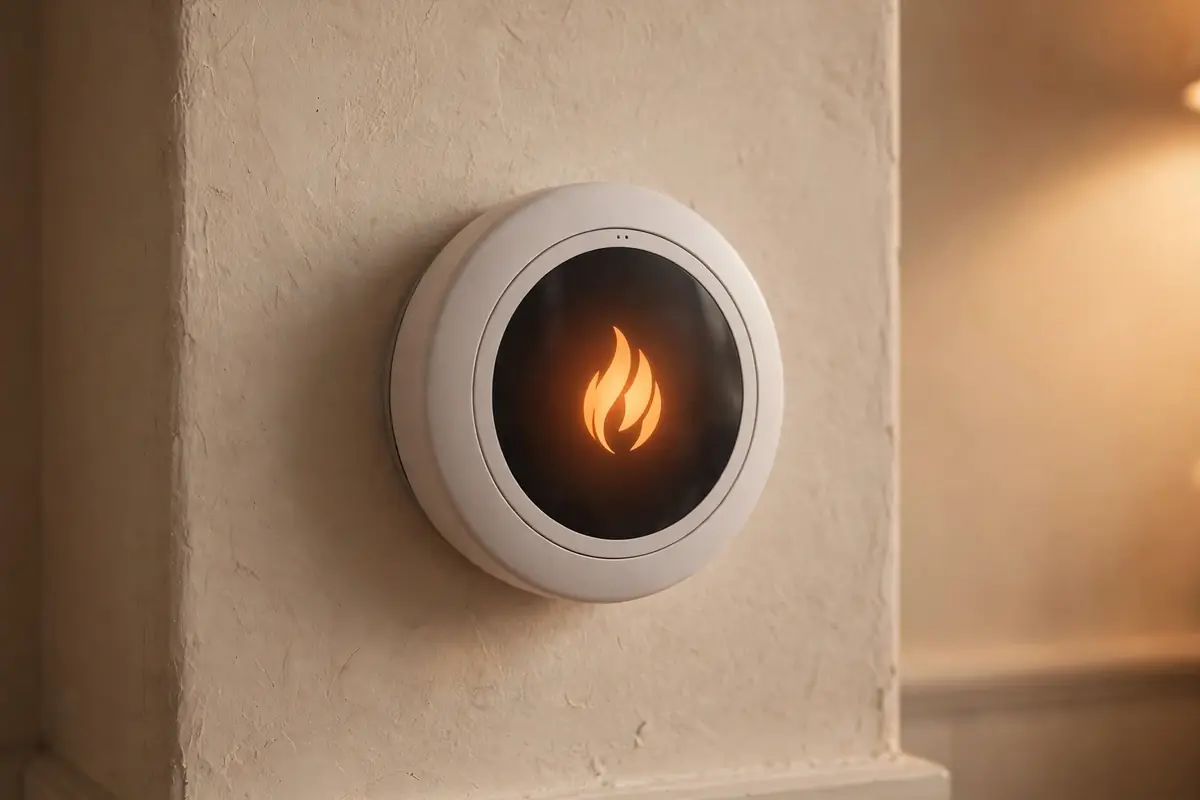
- Check the thermostat first: it should be on HEAT, not EM HEAT. Emergency heat runs the auxiliary strips alone and switches the heat pump off entirely.
- If the thermostat is right and auxiliary heat still stays on in mild weather, call a technician. Something is wrong.
- If the thermostat shows AUX HEAT on a mild evening, tell us on the call.
SAFE CHECKS
What can you safely check before you call, and where do you stop?
Work through these in order. Every step past this list ends with a technician doing the work.
- Thermostat: set it to HEAT, a few degrees above the room temperature, with the fan on AUTO, not EM HEAT.
- Filter: hold it up to the light. If you cannot see light through it, it is overdue. Replace it with the same size and type.
- Breaker: if the heat pump breaker has tripped, switch it back on once. If it trips a second time, leave it off.
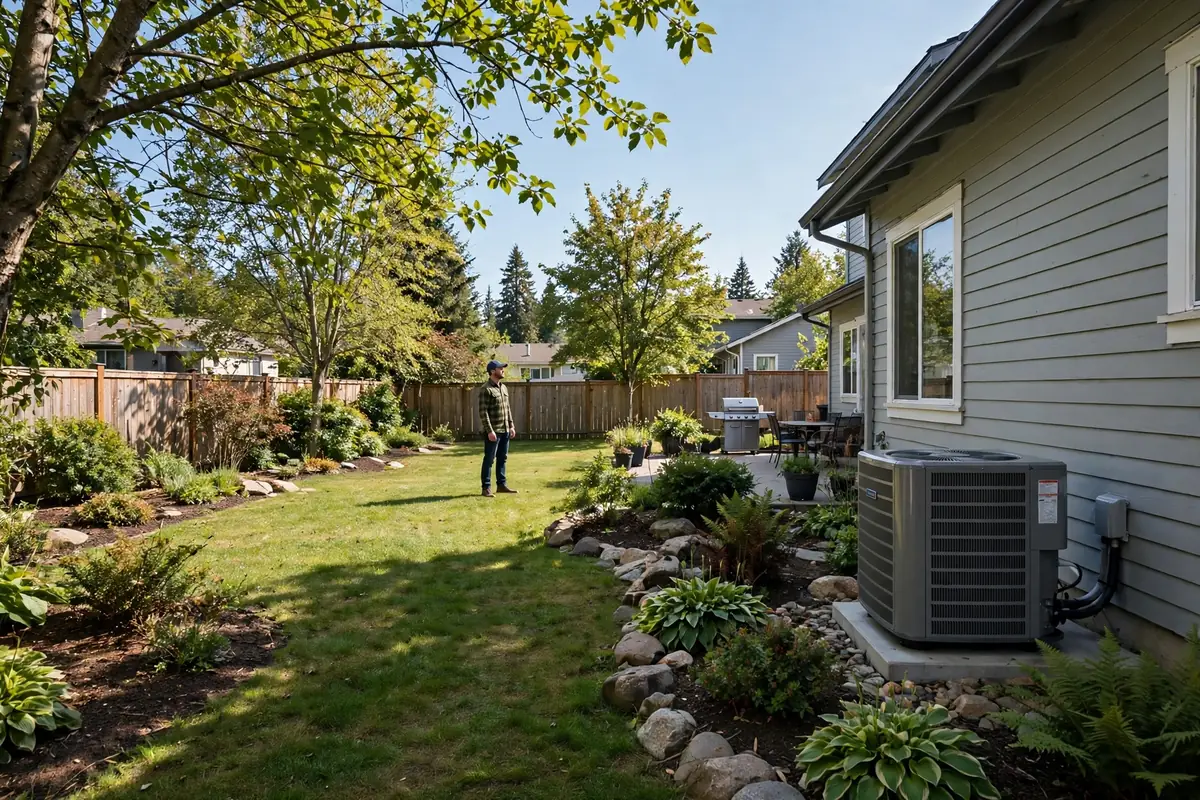
- Outdoor unit: look from a distance. Clear leaves and debris from around it. Do not open it, hose inside it, or touch wiring.
- Defrost: if the unit is steaming and the air feels cool for a few minutes, wait. If the cold air lasts, call.
- Frozen unit: switch to fan only and let the ice melt on its own. Do not chip the ice off, and do not pour hot water on it.
Stop and call if you smell burning, see water near electrical parts, or the system has stopped completely in freezing weather and will not restart. Do not open electrical panels, do not handle refrigerant, and do not bypass safety controls. Refrigerant work is technician-only under EPA Section 608.
COMMON REPAIRS
What usually fails in a heat pump, and what does it mean?
A heat pump is sized in tons, and the tonnage is on the outdoor unit nameplate.
- The nameplate also names the refrigerant: R-22, R-410A, R-454B, or R-32.
- R-22 is phased out, so an R-22 system runs on reclaimed supply.
- R-454B and R-32 are the current refrigerants for new systems.
- A sealed system does not use up refrigerant, so a low charge means a leak, and only a certified technician finds it.
- The wrong tonnage is why a system short cycles or never catches up in a cold snap.
- A thermostat set wrong can look like a broken heat pump. Our page on thermostat installation in Lubbock covers heat pump and dual-fuel compatibility.
| Part | Symptom it causes | What the technician checks |
|---|---|---|
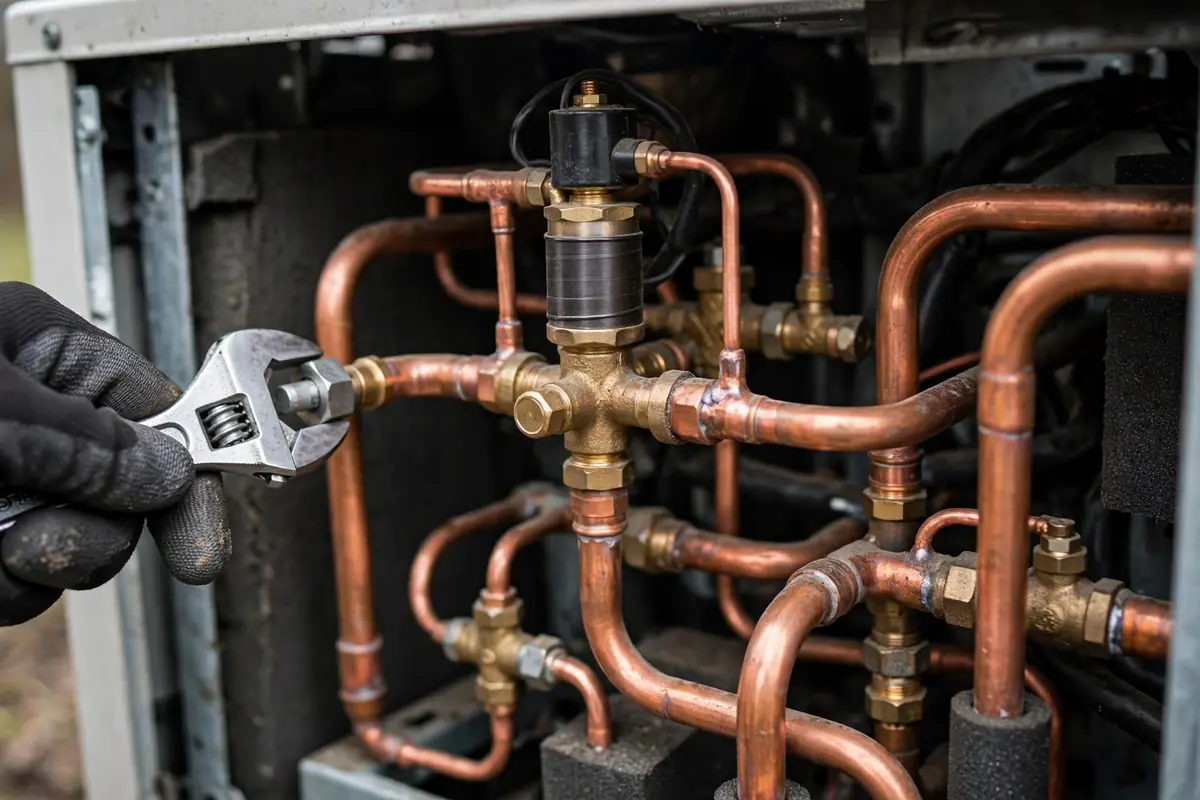
| Reversing valve | Heat pump blows cold air in winter, or cool air in summer, stuck in one mode | Whether the valve has failed or the control signal to it is missing |
| Defrost control | Outdoor unit cakes in ice and never clears; fan will not turn | The defrost sensor and control board, and whether the defrost cycle runs at all |
| Compressor | No heat or no cooling, or the outdoor unit will not run | Power supply, the capacitor, and the refrigerant charge, all tested before a part is named |
| Auxiliary heat strips | No heat in a cold snap even though the fan runs, or auxiliary heat never coming on | The strips, the sequencer, and the thermostat wiring |
| Outdoor coil | Weak heating, ice, or rising bills | Frost and dirt on the coil, airflow over it, and the refrigerant level |
| Thermostat | System stuck on emergency heat, or running at the wrong times | Settings, the EM HEAT switch, wiring, and calibration |
| Capacitor / contactor | System hums or clicks but will not start | Whether the capacitor has given out, and whether the motor it drives is still sound |
REPAIR COST
What changes the price of a heat pump repair in Lubbock?
Three things move the price, and the written quote names each one. No figure on this page is a price, because the price depends on your system.
- The part that failed: a capacitor costs less than a defrost control, and a defrost control costs less than a compressor.
- The age of the system: an older system may need a part that is harder to find, and that shapes the repair-or-replace call.
- The refrigerant type: an R-22 system runs on reclaimed supply, so a refrigerant repair costs more than the same repair on a newer system.
- Access and condition matter too: a unit that is hard to reach, or a system with more than one fault, takes longer to put right.
- Ask for both figures: the repair price and the replacement price side by side. Our repair-or-replace guide works both rules from your written quote.
REPAIR OR REPLACE
Should I repair or replace my heat pump?
Two rough guides can help you judge. Both of them run on the figures in your written quote, never on a number anyone guessed. Age alone never decides.
- The $5,000 rule: take the system age in years and multiply it by the cost of the repair. If the result is over $5,000, replacement is worth a serious look.
- The 50% rule: if a repair costs more than half of a replacement, replacement is usually the smarter move.
- What failed tips the decision: a reversing valve, a defrost control, or a capacitor leans repair. A compressor on an old system, especially an R-22 system, leans replace.
- The ratings tip it too: a new heat pump in Texas must meet 14.3 SEER2 and 7.5 HSPF2, so an old system can sit far below what a new one delivers.
- If replacement is the direction, our page on heat pump installation in Lubbock explains sizing, SEER2 and HSPF2, and dual-fuel.
- If you heat with a gas furnace as well, see the furnace installation in Lubbock page. It explains the dual-fuel side of the same decision.
THE VISIT
What happens on a heat pump repair visit?
Book
Say what the heat pump is doing: cold air, auxiliary heat stuck on, a frozen unit, or short cycling, and when it started. The technician confirms timing on the call.
Inspection and Diagnosis
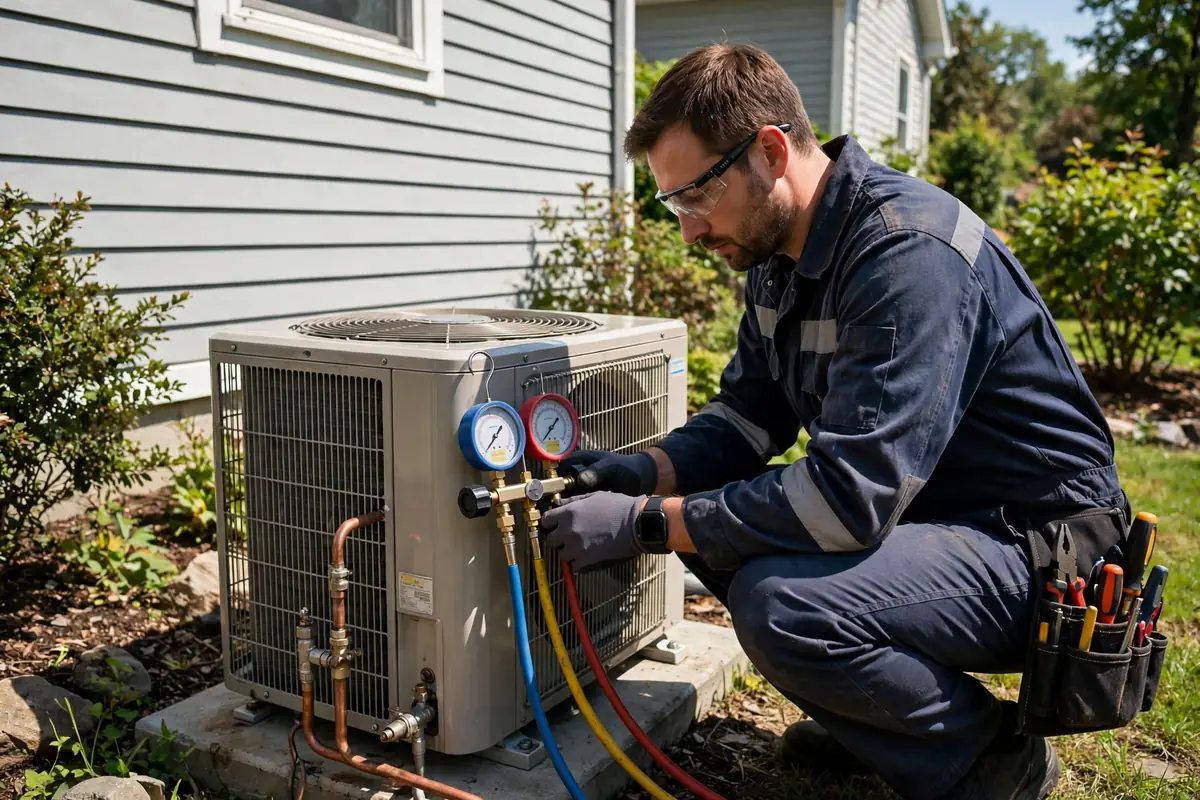
The technician examines the system, runs it in heating, and checks the defrost cycle, the reversing valve, and the refrigerant charge.
Repair or Replacement
The technician explains the fault in plain words, including whether it is a fault at all or normal cold weather behaviour.
Before any work begins, you get the repair figure in writing, with the replacement figure next to it if a new system is genuinely an option. Work starts only after you approve it.
Safety Check
Once the repair is in, the system is run and checked. The technician verifies warm air at the vents, airflow, and a working defrost cycle before leaving.
A fall heating check, done before winter, covers those points. A heat pump needs both a spring cooling check and a fall heating check, because it runs both seasons. The full audit lives on our HVAC maintenance plan in Lubbock page.
What to have ready when you call
Tell us the symptom in your own words, when it started, and what you already checked.
- Have the thermostat setting ready, and whether it shows AUX HEAT.
- Have the filter condition ready.
- Have the breaker status ready.
- Have the state of the outdoor unit ready: whether it has ice, water, or debris around it.
- Have the model and age of the system ready.
You do not need to know all of it. The call is short, and the technician confirms timing on the call.
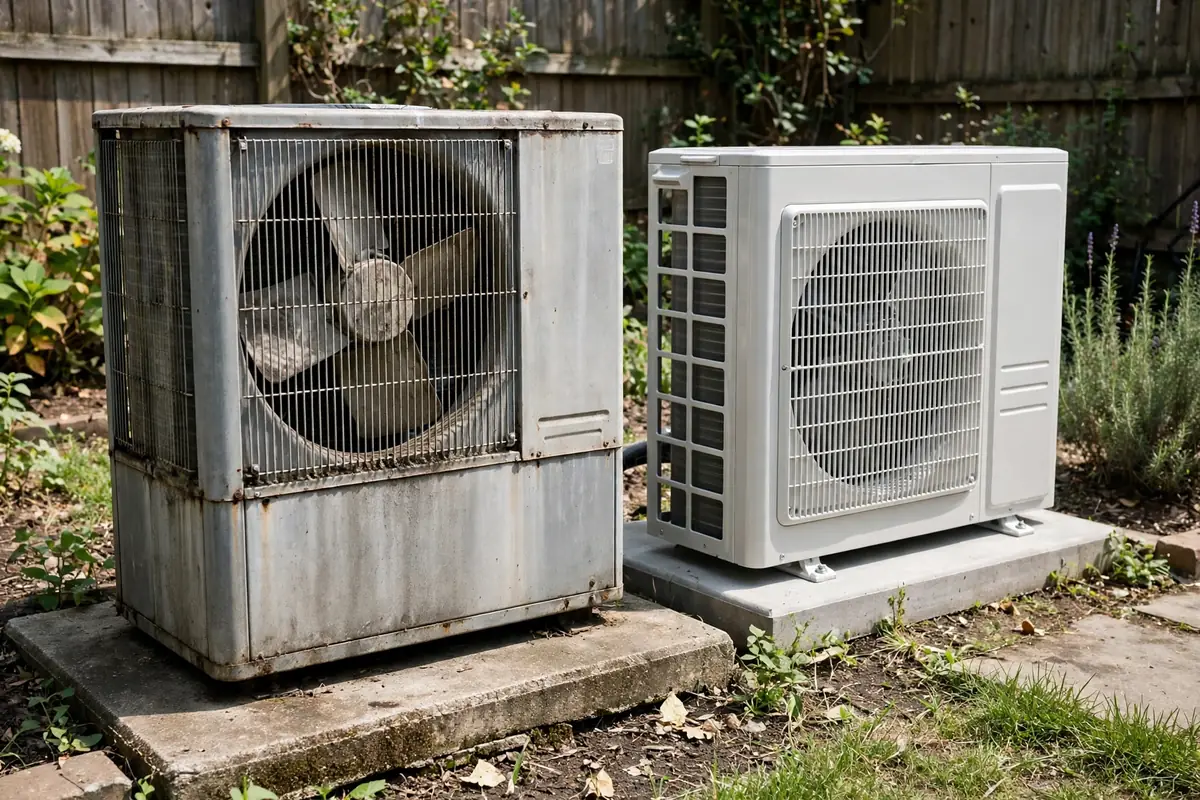
Before and after: heat pump repair in Lubbock
These are illustrative examples only. They are not Tech Terrace HVAC jobs in Lubbock.
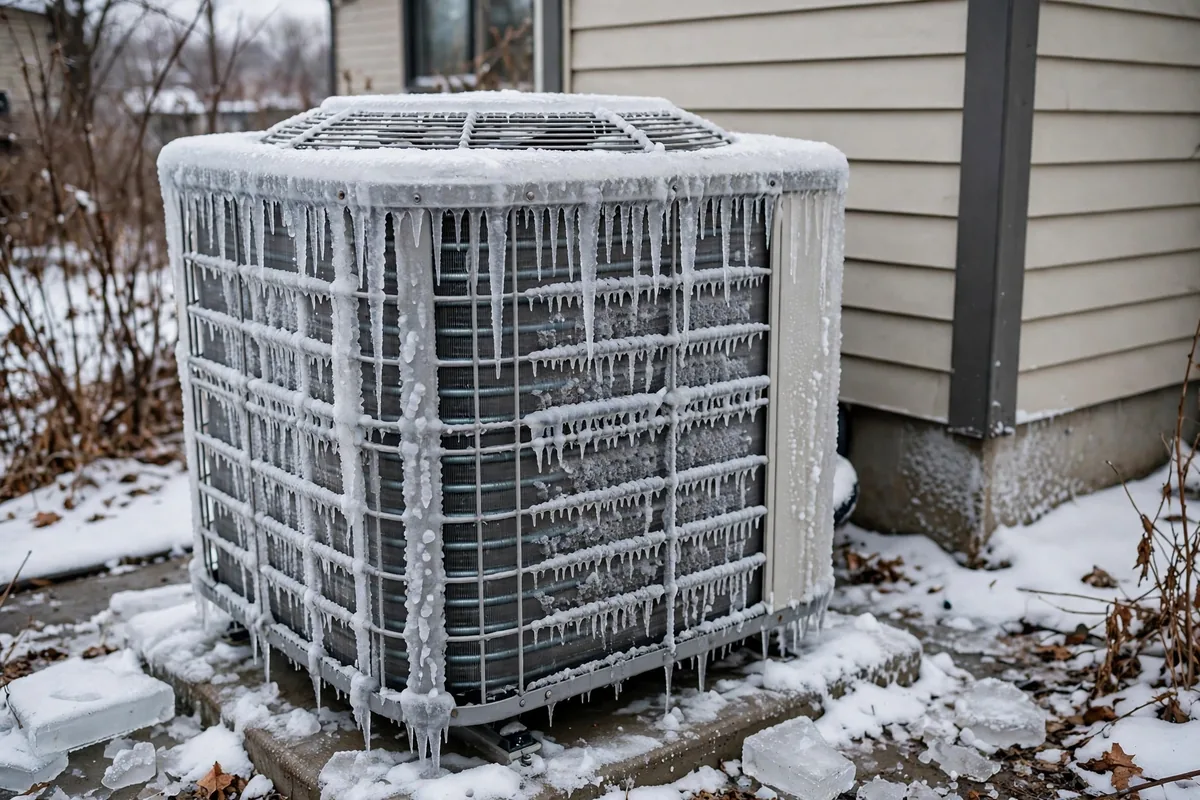
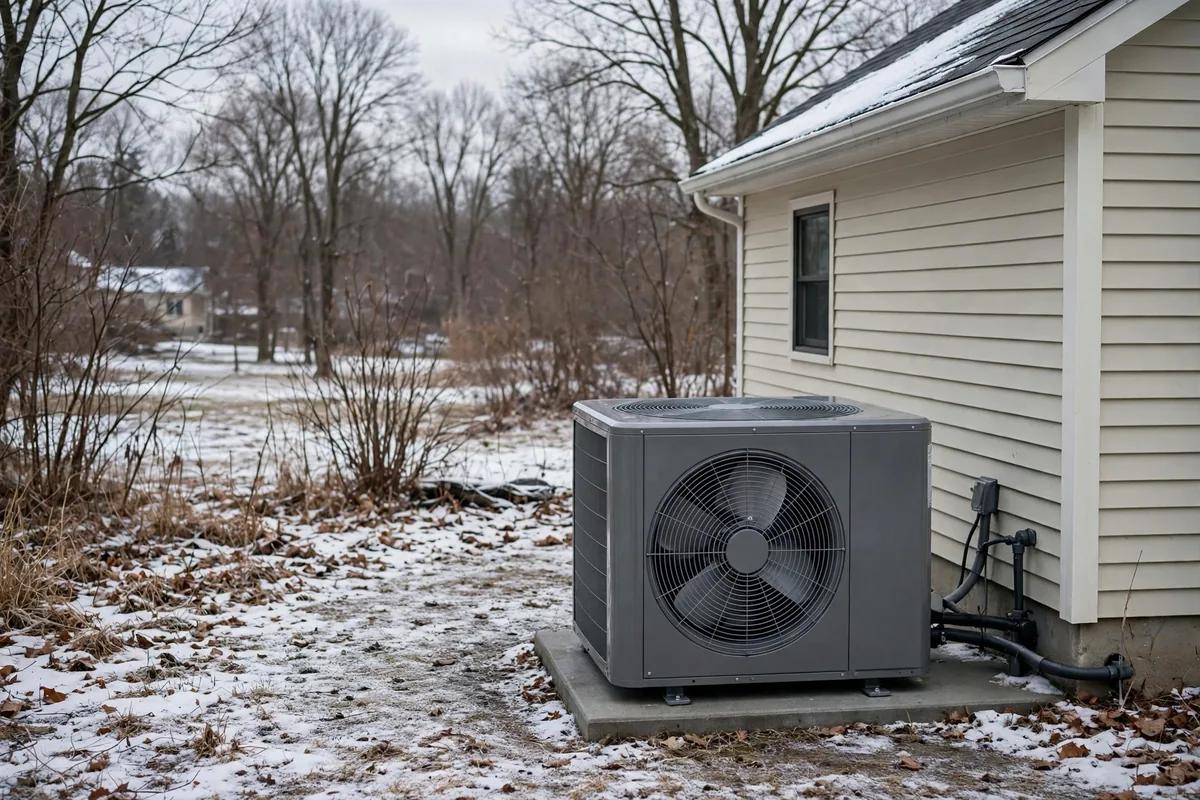 BeforeAfter
Before and after: frozen heat pump defrosted
These are illustrative examples only. They are not Tech Terrace HVAC jobs in Lubbock.
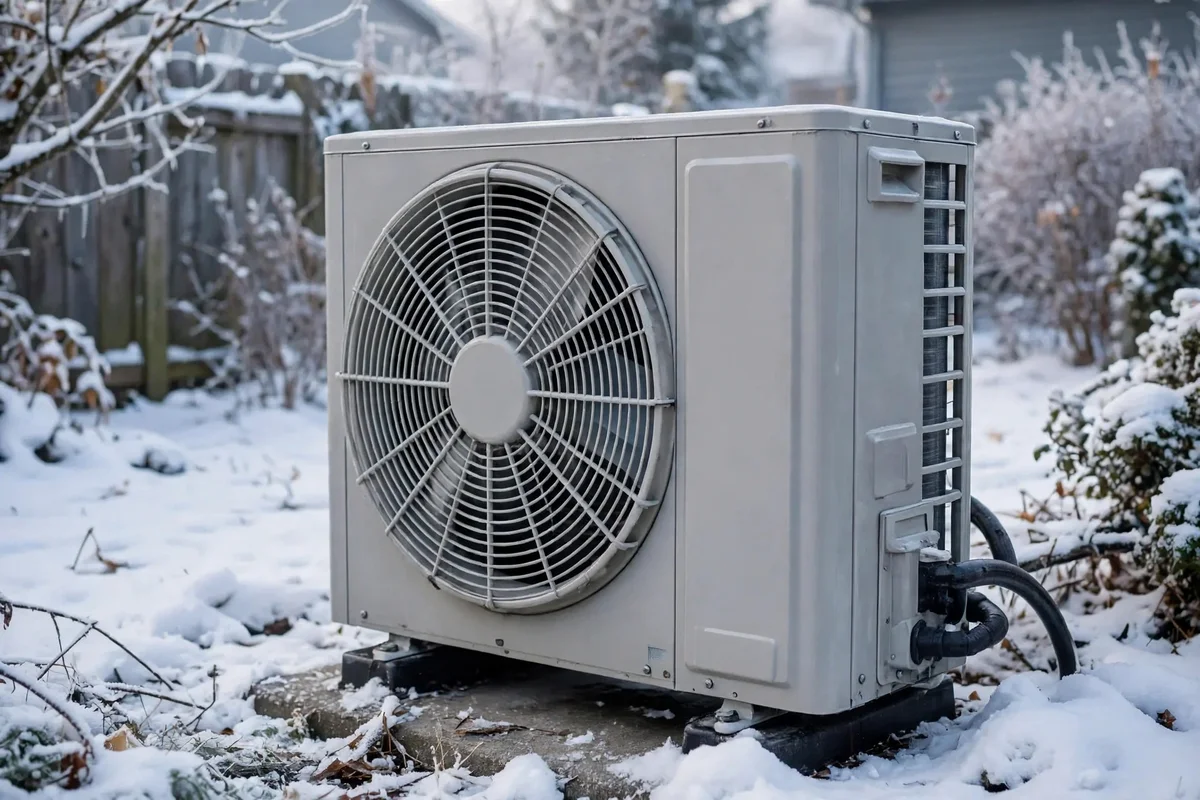 BeforeAfter
QUESTIONS
What do Lubbock homeowners ask about heat pump repair: aux heat, ice, and defrost?
Sometimes it is normal. During a defrost cycle the heat pump briefly blows cool air while it melts frost off the outdoor coil, and that lasts only a few minutes. If the air stays cold, the cause is usually a reversing valve fault, low refrigerant, or auxiliary heat running with a problem. Call and describe what the air feels like.
Auxiliary heat is electric resistance heat inside the air handler. It helps the heat pump on the coldest nights, when the heat pump alone cannot keep up, and it also keeps the air warm during a defrost cycle. It comes on automatically below the balance point. If it stays on in mild weather, something is wrong.
A light frost that clears on its own is normal. If the unit is caked in ice and the fan will not turn, switch the system to fan only and let the ice melt. Do not chip the ice off the unit, and do not pour hot water on it. If it freezes again, call.
Both heat Lubbock homes, and the honest answer depends on your house. A heat pump heats and cools with one system and loses capacity in cold weather, when it leans on auxiliary heat. A gas furnace is the other common choice here, and many homes pair one with a heat pump as dual fuel. Ask for both prices.
It depends on the part that failed, the age of the system, and the refrigerant type. A capacitor costs less than a defrost control, and a defrost control costs less than a compressor. You get the repair price in writing before work starts, with the replacement price beside it when replacement is a real option.
A heat pump in winter often runs long and steady, and that alone is not a fault. It is a problem when the house never reaches the thermostat setting, the auxiliary heat stays on, or the air from the vents feels cold. Those signs mean a technician should check the system.

TECH TERRACE HVAC · CALL NOW
Cold air, aux heat stuck on, or a frozen unit: what to do next about your Lubbock heat pump
Cold Air in Winter or Aux Heat Stuck On? Call With It
Tech Terrace HVAC fixes heat pumps that blow cold air, run on aux heat, or freeze up. Cold air in winter, auxiliary heat stuck on, or a frozen outdoor unit, call now on (806) 240-9865. The technician confirms timing on the call.
Repair or Replace Your Heat Pump? Work It From the Quote
On our page about heat pump installation and replacement in Lubbock, sizing, SEER2 and HSPF2, and dual-fuel.
Heat pump repair in Lubbock, TX, from Tech Terrace HVAC: defrost, reversing valve, and auxiliary heat, with a written price before work begins.
Furnace repair in Lubbock covers no-heat calls, cold air from the vents, and the parts that fail most often, the other way Lubbock homes get heat.
- A finished heat pump repair is on our projects page, before and after.
- Repair or replace? Our repair-or-replace guide works both rules from your written quote.
- The same visit process and written-price rule apply in Wolfforth homes and Slaton homes in a cold snap too.
Find us
Heat pump repair in Lubbock: where we work from
Our base is at 1203 Donald Preston Drive, Wolfforth, Texas 79382, and the technician comes to you. For heat pump repair Lubbock TX homeowners call (806) 240-9865 and describe the symptom. Cold snaps and frozen outdoor units are the usual Lubbock calls.
- Areas served: Tech Terrace, Overton, Heart of Lubbock, Lakeridge, and South Lubbock, with the same visit process across Lubbock.
- The same visit process applies in Wolfforth and Slaton too.
- What to have ready: the symptom, when it started, and the system brand and age if you know them.
- How the visit works: the technician comes to your home. This address is the base the visit starts from.
Tech Terrace HVAC 1203 Donald Preston Drive, Wolfforth, Texas 79382, USA (806) 240-9865