
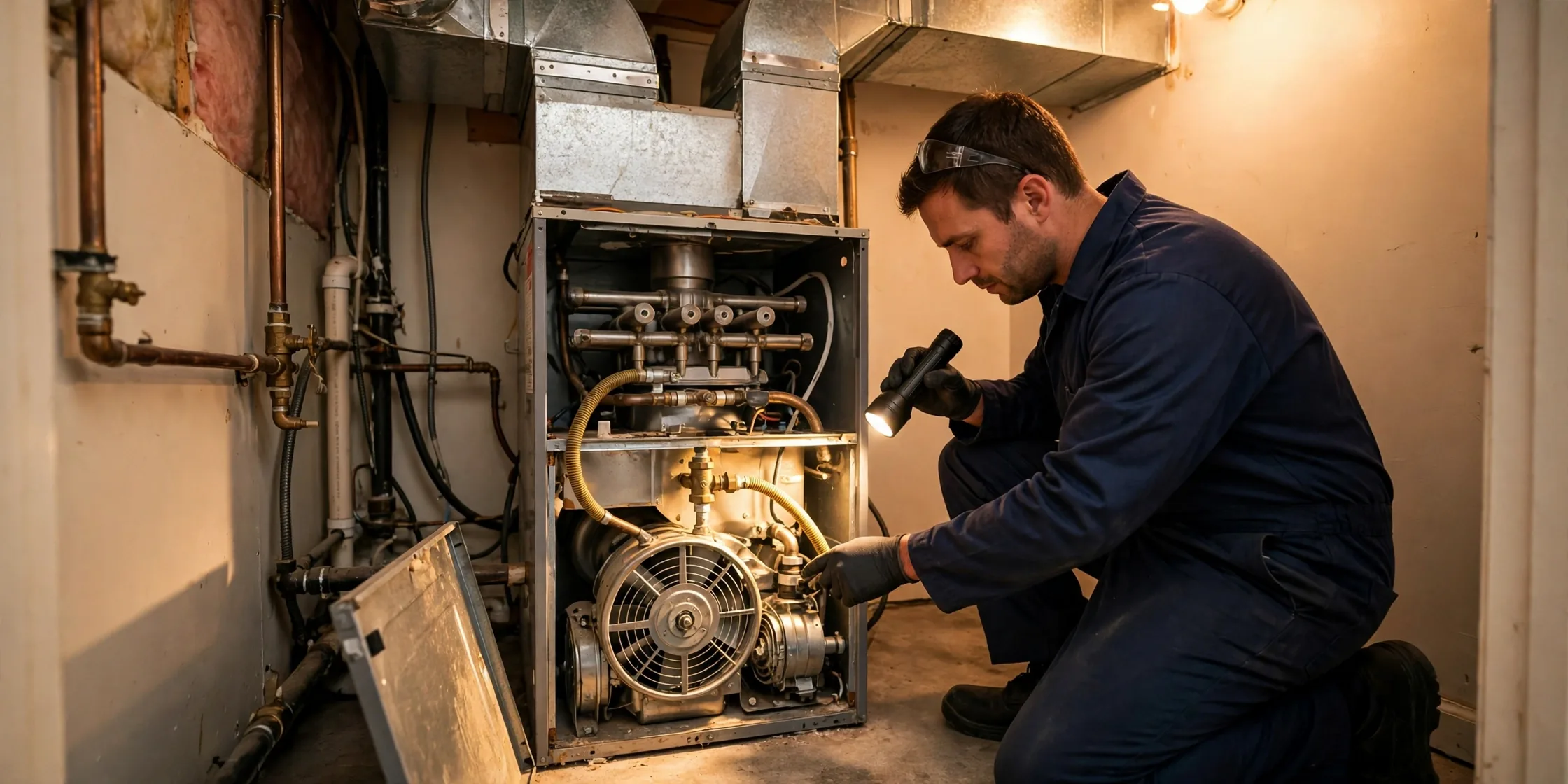
Furnace Repair in Lubbock, TX
No heat on a cold night, or a smell of gas. Safety first, then call.
- ✓Written price before work
- ✓Call direct, no forms to fill
- ✓Serving Lubbock, Wolfforth & Slaton
SAFETY FIRST
Do you smell gas? Read this first
If you smell gas, leave the house at once. Do not use a light switch, a phone, or any appliance inside, and do not try to find the leak. From a safe distance, call 911 and Atmos Energy on 866-322-8667. Do not go back inside until Atmos Energy or emergency services say it is safe. The same rule applies if a gas line looks damaged or the meter has been hit.
What this page adds: gas safety first. The gas-smell step before any other check, then the ignition, flame sensor, and blower faults that fail most often in Lubbock.
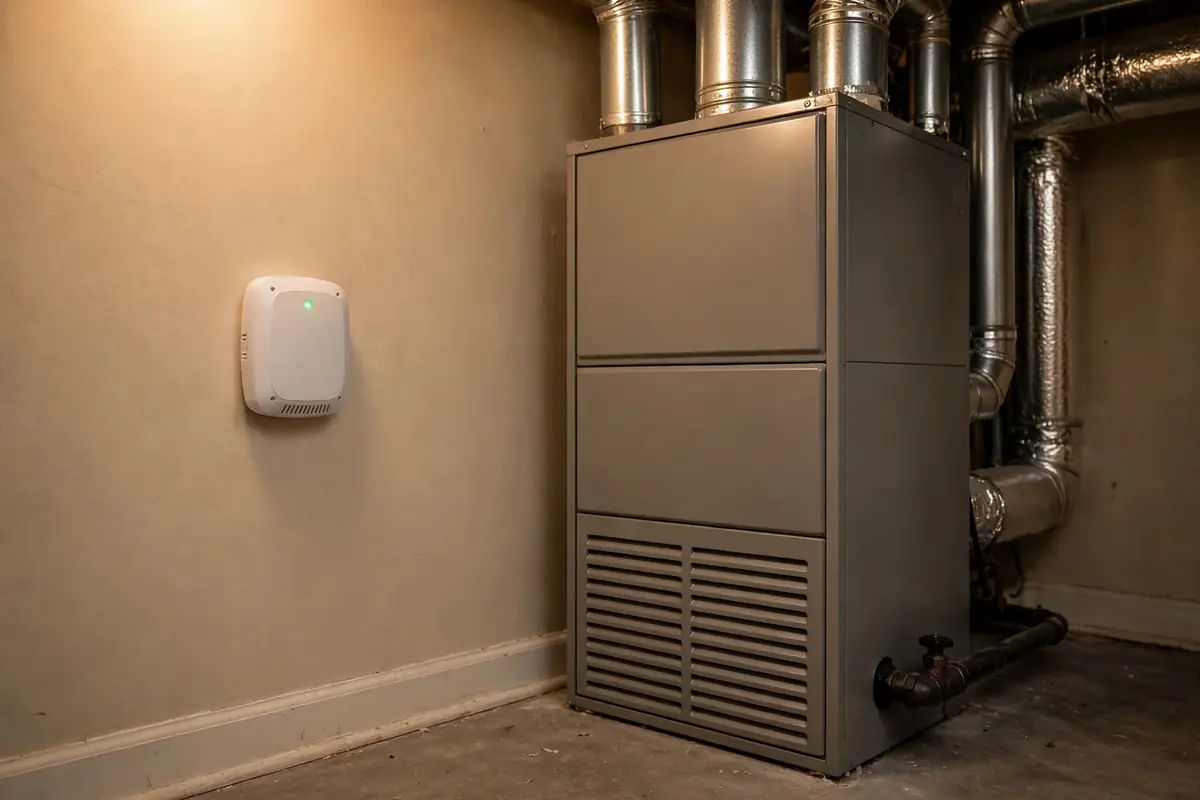
Carbon monoxide is the other danger to know. It has no smell and no colour, and it comes from a furnace that is not burning or venting the way it should: a cracked heat exchanger, a blocked flue, or a burner fault can all let it build up. That is why every home with a gas furnace needs working carbon monoxide detectors, and why a detector that has sounded means leaving the house first and calling from outside. Gas leaks, the gas valve, and the ignition system are all technician-only work. Never open a gas connection or adjust a burner yourself.
ANSWER FIRST
Does your furnace need repair in Lubbock?
If your furnace runs but gives no heat, if it lights and shuts off within seconds, or if it starts and stops every few minutes, it needs a look. Most of these faults come down to one failed part, a dirty filter, or a thermostat setting, and a technician finds which one it is before any work starts. You get the price in writing first, then you decide.
Gas furnaces are the common heating choice in Lubbock, usually paired with central air conditioning, and they earn their keep here. The city averages about 61 freezing nights a year, with a January average low of 27.2 degrees, and design heating sits around 15 to 19 degrees. On a night like that, a furnace that will not light is not a nuisance, it is the whole house going cold.
NO HEAT
Why does my furnace run but give no heat?
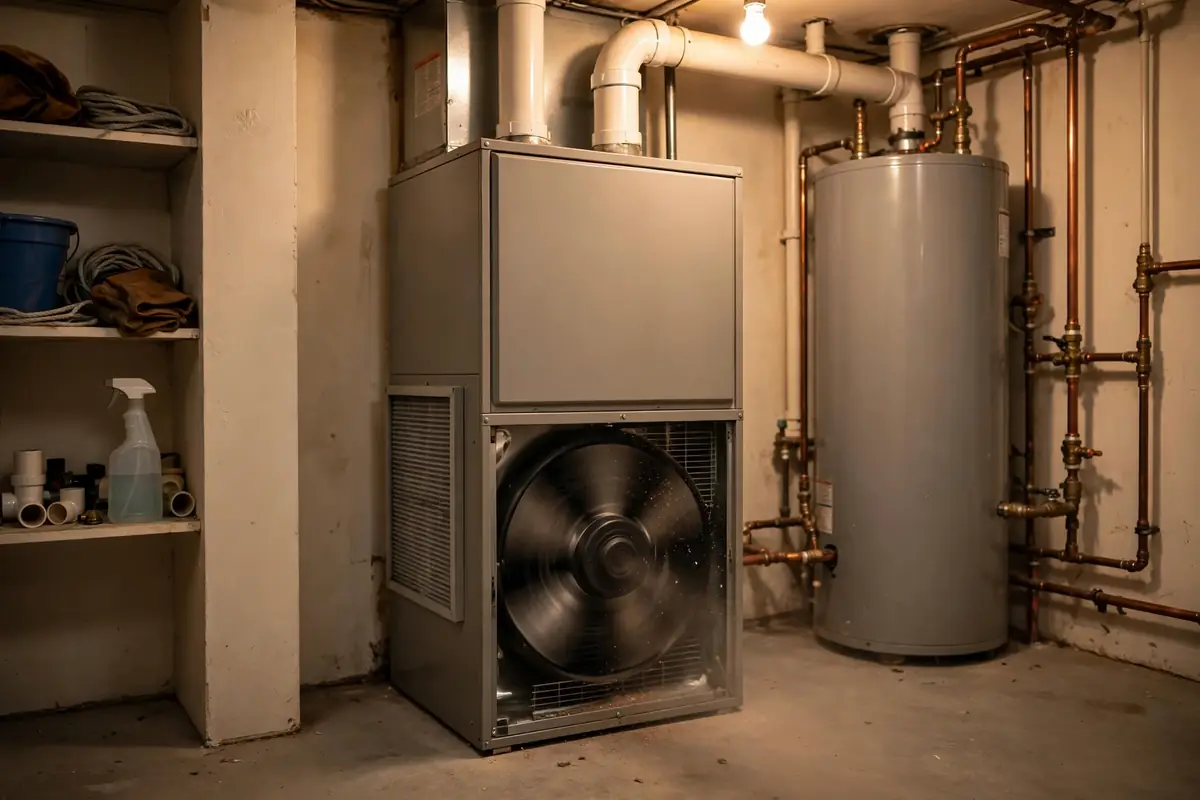
The blower can run while the burner never lights, and that is the most common version of this fault. The ignition system tries to light the gas, fails, and the furnace locks out after a few tries.
- A dirty filter overheating the furnace is the first cause a technician checks.
- A flame sensor that cannot prove the flame is the second cause a technician checks.
- A thermostat fault is the third cause a technician checks.
- An intake pipe that is blocked is the fourth cause a technician checks.
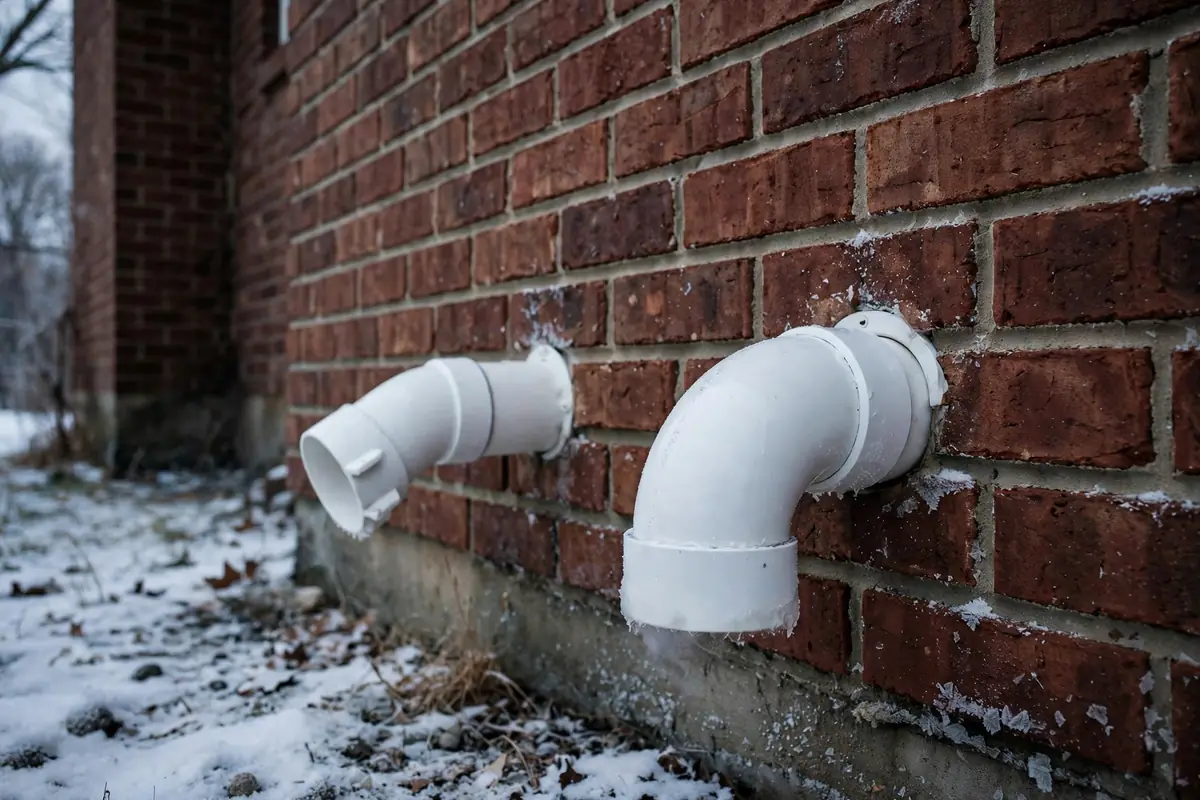
The intake and exhaust pipes leave through the side wall of the house, and dust, debris, or snow can block them from outside.
Cold air from the vents needs a careful read. Cold air at the start of a cycle is normal, because the blower starts before the heat exchanger warms up. Cold air that never warms up is a fault: the burner never lights, the thermostat is set wrong, or the furnace is in lockout after failed ignition. Our furnace no-heat guide works through the same checks step by step, with the same stop points.
SAFE CHECKS
What can you check safely before you call for a furnace that will not heat, and where do you stop?
Work through these in order. Gas, ignition, and burner work is technician-only, and every step past these checks ends with a technician doing the work.
- Thermostat: set it to HEAT, a few degrees above room temperature, fan to AUTO. If it runs on batteries, check them.
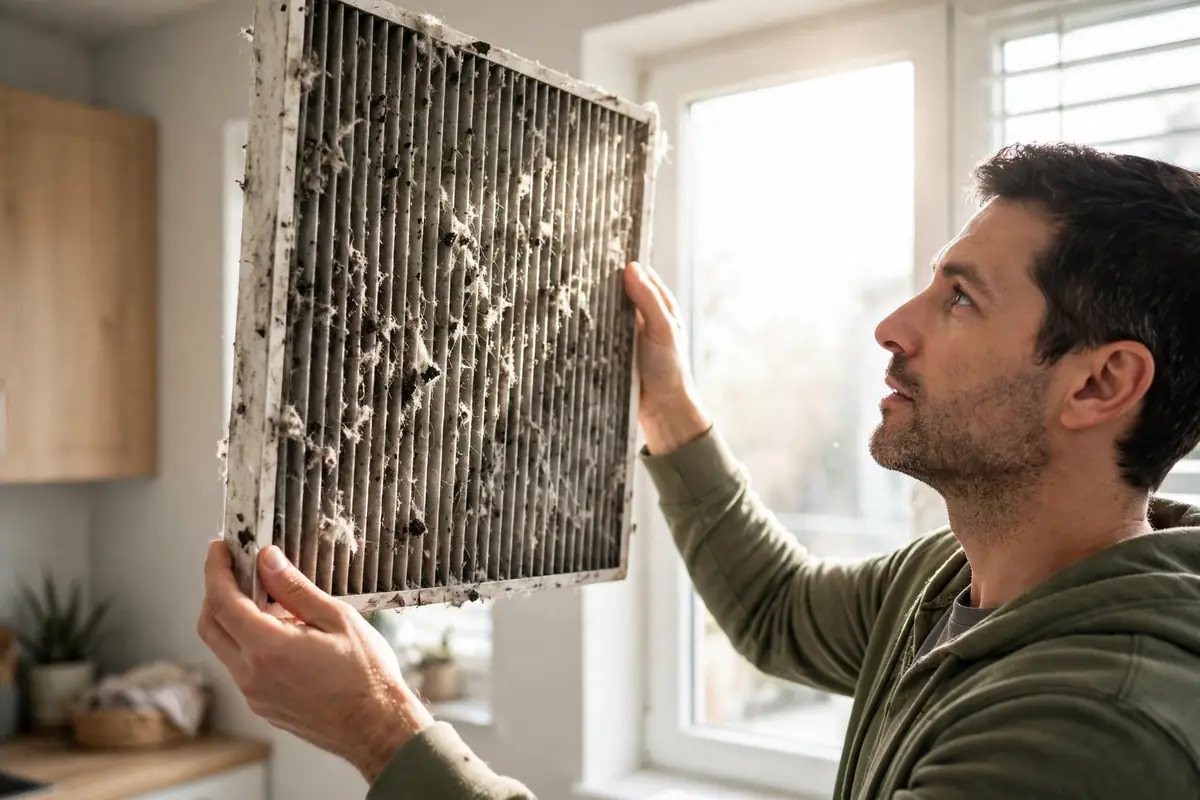
- Filter: hold it up to the light. If you cannot see light through it, replace it with the same size and type. A clogged filter overheats the furnace and trips the safety limit.
- Power switch: check the switch by the furnace, which looks like a light switch. If it is off, switch it on once and wait to see if the furnace starts.
- Breaker: if the furnace breaker tripped, switch it back on once. If it trips a second time, leave it off.
- Vent pipes: look at the intake and exhaust pipes where they leave the house. If you can see a blockage from outside, note it and call. Do not open the furnace to reach them.
- Gas smell or alarm: if you smell gas, or the carbon monoxide alarm has sounded, do not run any more checks. Leave the house and call from outside.
COMMON REPAIRS
Which furnace parts fail most often in Lubbock: ignition, flame sensor, blower?
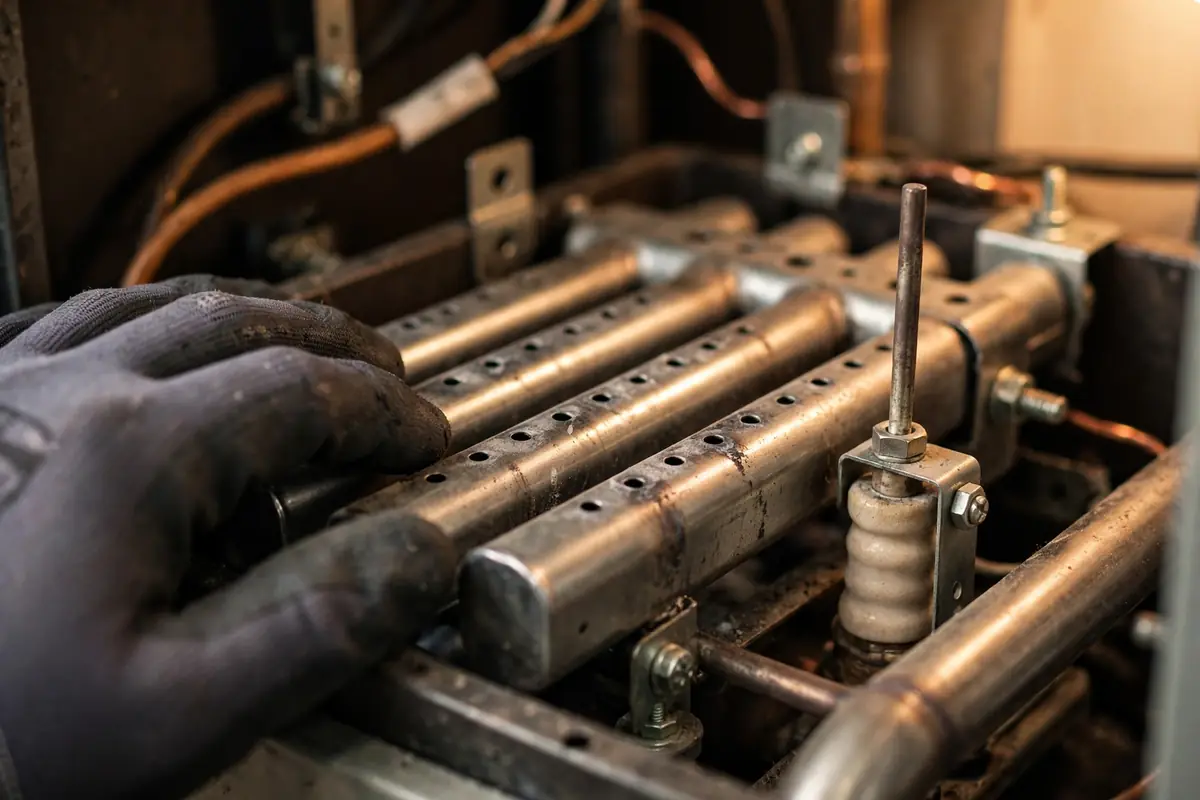
The parts that fail most often are the same short list. Each one has a symptom a homeowner can recognise, and each one is checked by the technician before any part is named. The flame sensor deserves a note of its own: it is a small metal rod that proves the flame is lit, and when it is dirty or worn, the control shuts the gas off within seconds of lighting. That is the most common reason a furnace lights and then shuts off.
| Part | Symptom it causes | What the technician checks |
|---|---|---|
| Igniter | Furnace tries to start but the burner never lights | Whether the igniter has failed, and whether gas reaches the burner |
| Flame sensor | Burner lights, then shuts off within seconds | Whether the sensor is dirty or worn, and whether the flame is steady |
| Blower motor | Weak airflow, or no air from the vents | The motor, its capacitor, and the airflow at the vents |
| Thermostat | Furnace will not start, or runs at the wrong times | Settings, batteries, wiring, and how accurately it reads temperature |
| Gas valve | Burner never lights, or the flame is weak and uneven | Gas supply to the valve, and the valve signal from the control board |
| Heat exchanger | Carbon monoxide risk, soot, or a burner flame that looks wrong | The exchanger for cracks, the flue for blockage, and the burner flame |
A cracked heat exchanger is the one fault that changes the decision on its own. It can let carbon monoxide into the air the house breathes, and it cannot be patched. If the technician finds one, the honest answer is usually replacement, not repair, and the next section works through that choice. A thermostat fault is the cheapest cause on this list, and it is checked before any part is named.
PRICING
What changes the price of a furnace repair in Lubbock?
The part that failed is the biggest factor.
- An igniter or a flame sensor is a single part.
- A blower motor or a control board is a bigger job, and a heat exchanger is a core component, so the price follows that difference.
- System age matters too, because parts for older furnaces can be harder to find.
- Access matters: a furnace in a tight closet or a crowded attic costs more to reach than one in an open utility room.
- Gas and electrical work add to the job, because they take a technician and the right checks.
- Repair history matters: the first repair on a furnace is different from the third in two years.
Ask for the price in writing before work starts. Ask for the replacement price beside it where replacement is a real option. That pair of figures is what the next section works with.
REPAIR OR REPLACE
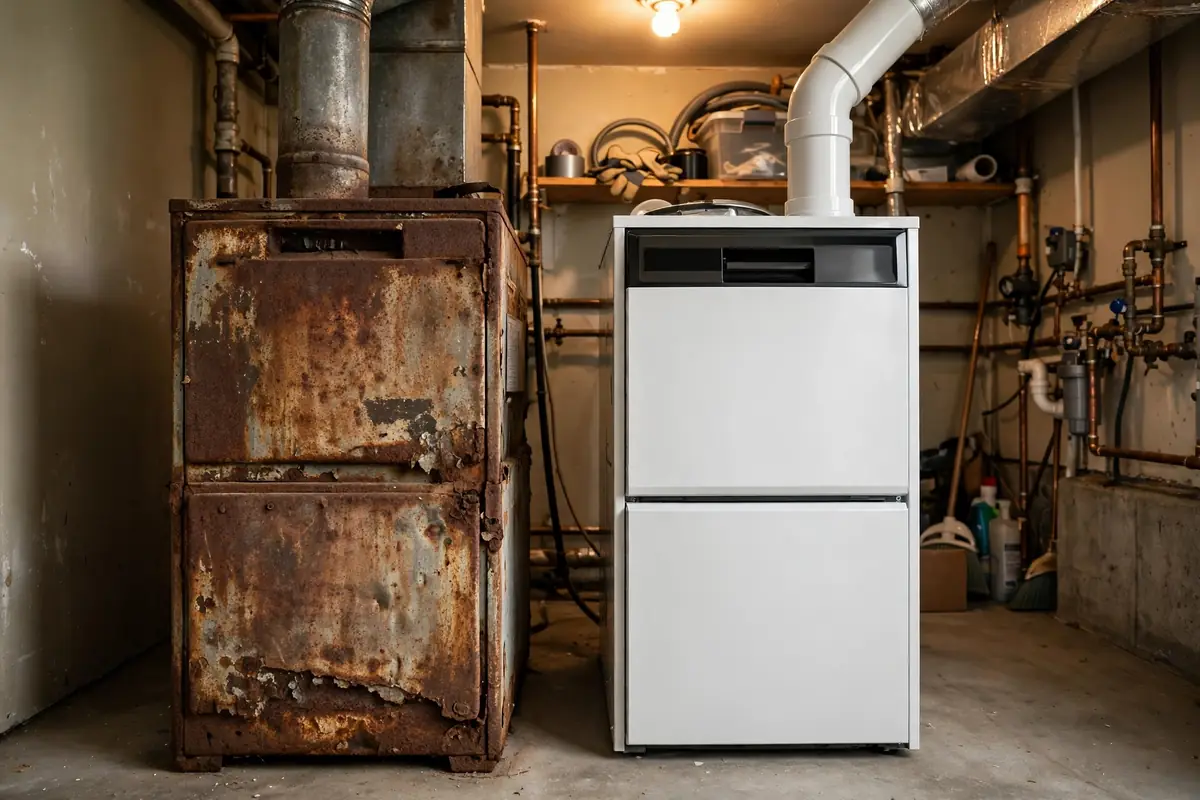
Should you repair or replace your furnace?
Two rules decide it, and both work from your written quote.
- The $5,000 rule says: system age in years times the repair cost, past $5,000, replacement is usually the smarter move.
- The 50% rule says: repair cost over half the replacement cost, replacement is usually smarter.
- Take a 14-year-old furnace with a $400 repair: 14 times 400 is $5,600, past $5,000, so the rule points to replacement.
- With a $150 repair on the same furnace, 14 times 150 is $2,100, so the rule points to repair.
What failed matters as much as the maths.
- An igniter or a flame sensor is a single part.
- A cracked heat exchanger is different: it is a safety fault, not a price question, and it usually means replacement.
Our repair or replace guide works through both rules step by step, and our furnace installation page covers AFUE, sizing, and what a complete quote names.
THE VISIT
What happens on a furnace repair visit in Lubbock: gas safety first, then the fault?
Book
Say what the furnace is doing and when the trouble started. The technician confirms when the visit will happen during that call.
Inspection & Diagnosis
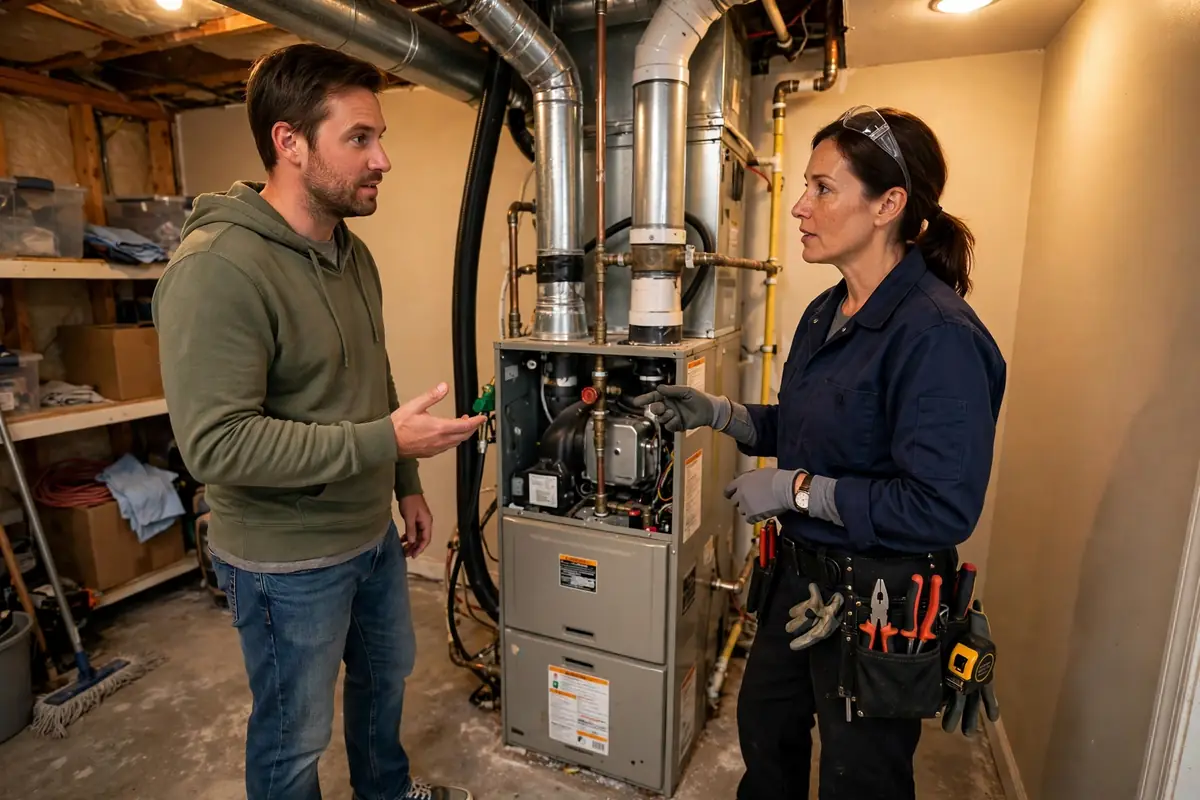
The technician checks gas safety first, then examines the furnace to find the fault, starting with the filter, thermostat, and ignition.
Repair or Replacement
The technician explains the fault in plain words, and talks you through what the repair will involve. Before any work begins, get the repair figure in writing, and the replacement figure next to it if a new furnace is genuinely an option. Work starts only after you approve it.
Safety Check
Once the repair is in, the furnace is run and checked. The technician verifies warm air, the burner flame, and the flue before leaving.
A maintenance visit follows the same pattern. It covers the heating half of the maintenance audit in full:
- The filter is checked.
- The burners are checked.
- The ignition is checked.
- The flame sensor is checked.
- The flue and vent pipes are checked.
- The carbon monoxide alarm is checked.
A fall check, done before the first freeze in early November, covers those points before the cold nights arrive rather than during them.
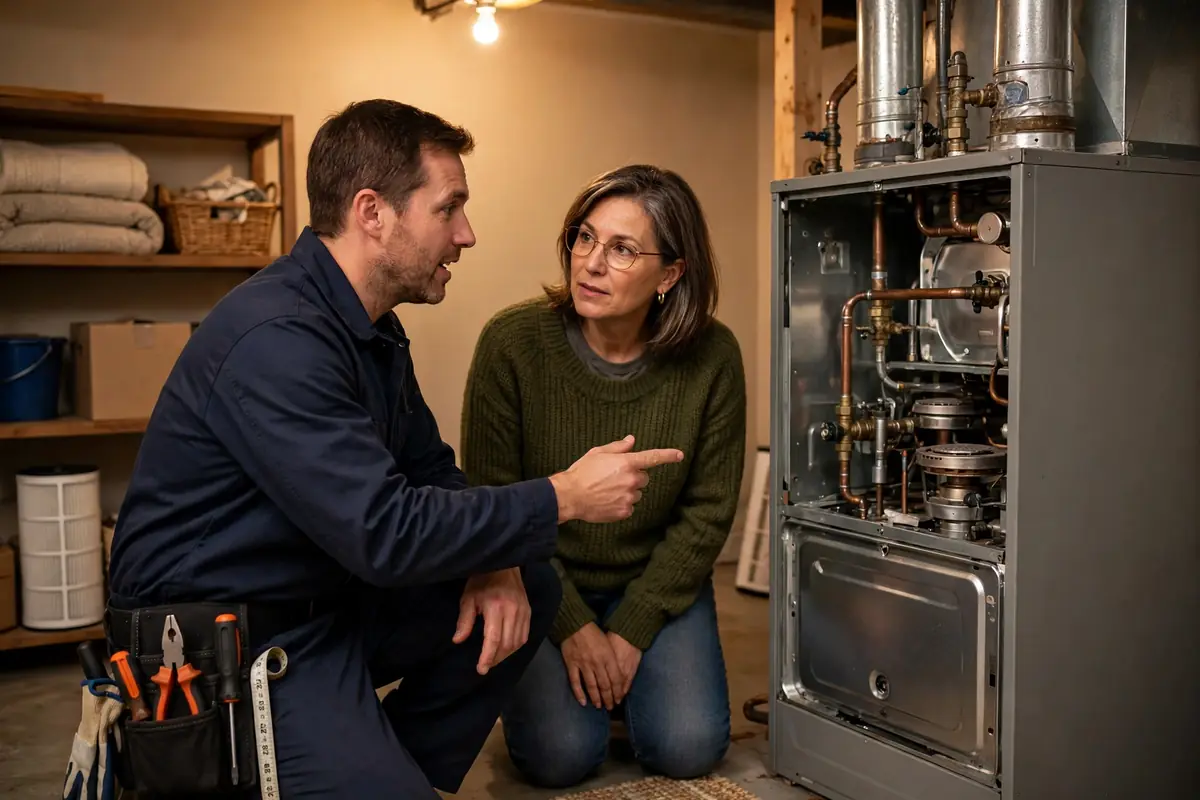
Before and after: furnace repair in Lubbock
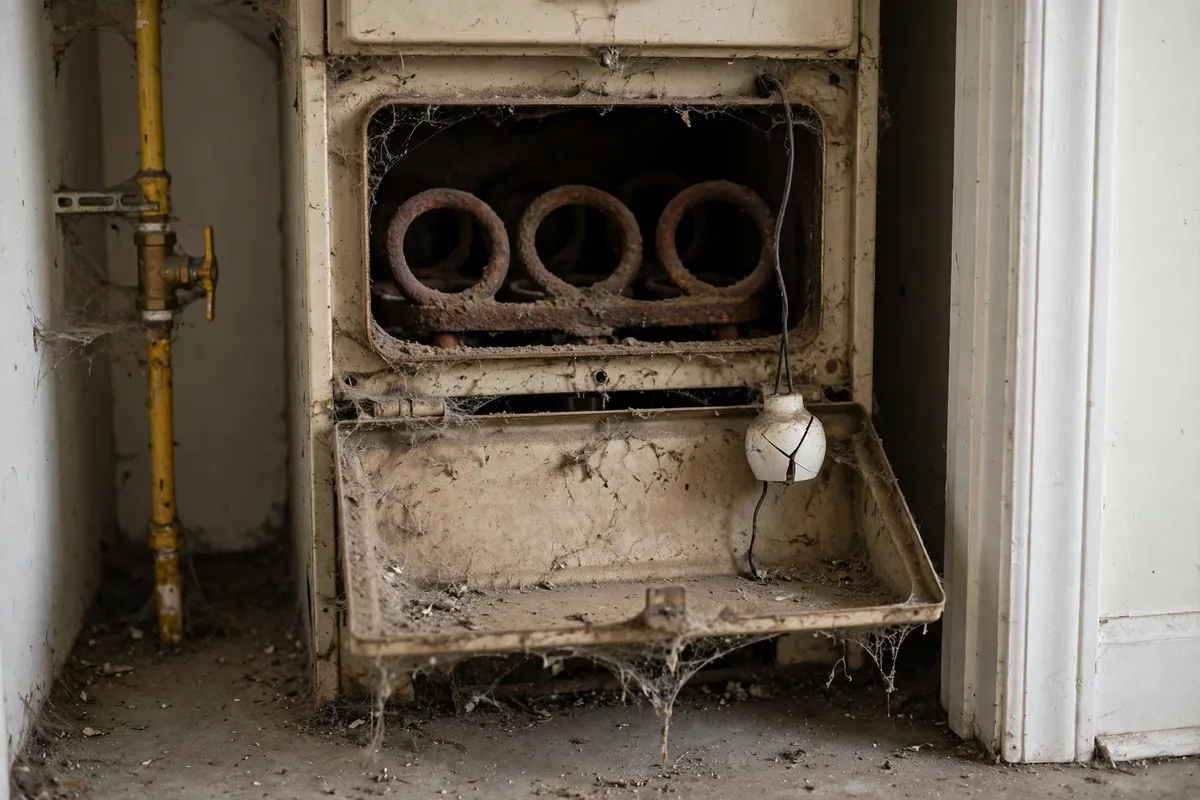
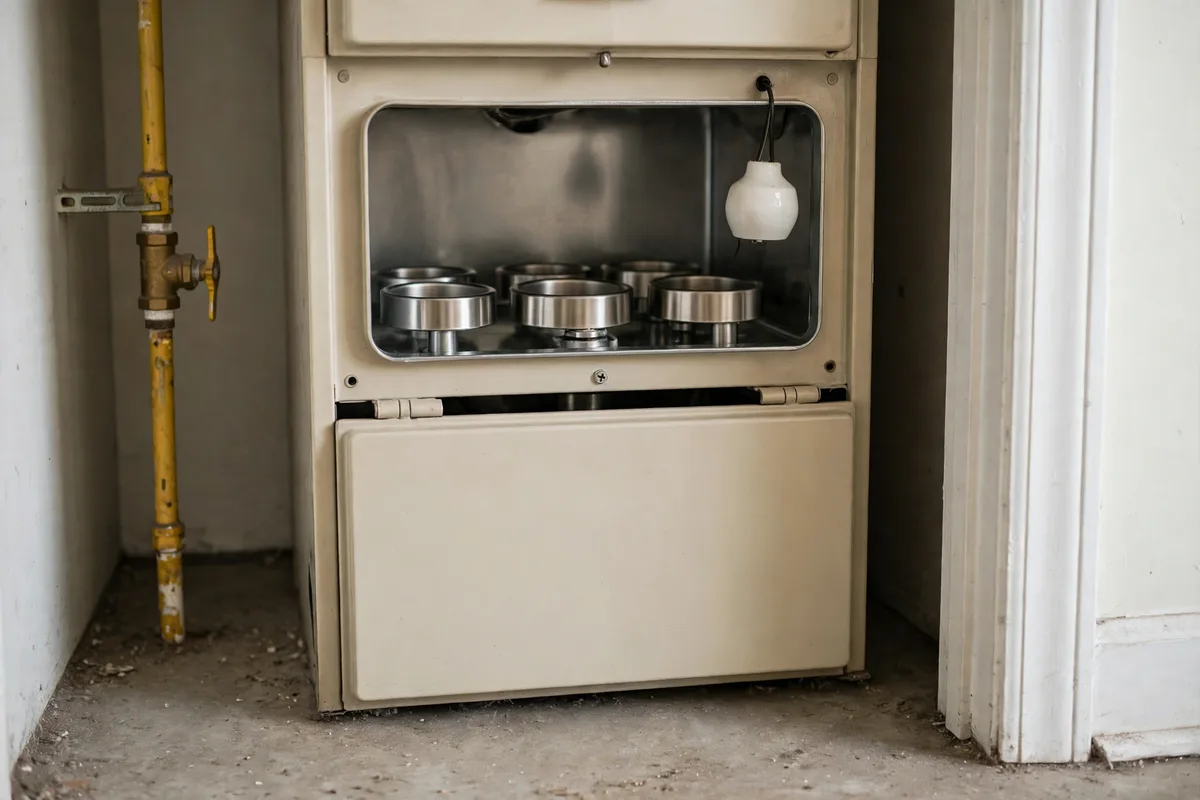 BeforeAfter
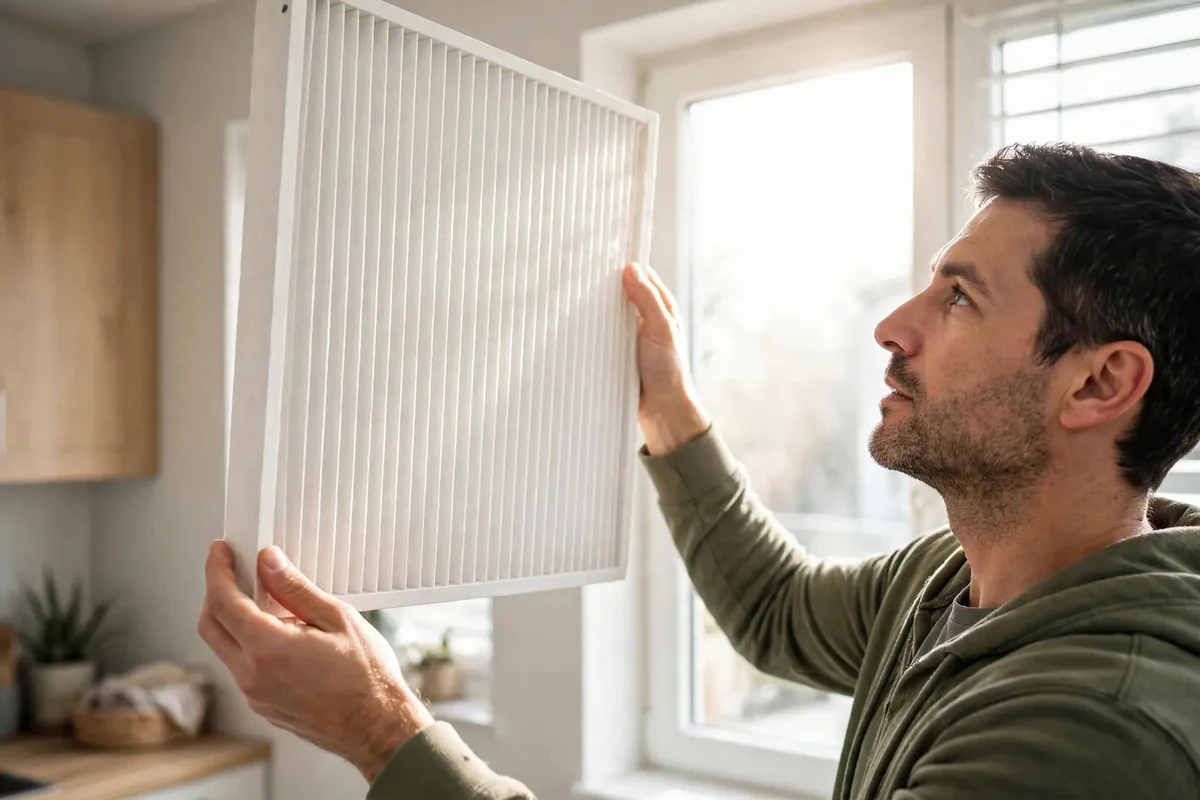
Before and after: clogged filter replaced
 BeforeAfter
These before-and-after photos are illustrative examples only. They show genuine jobs from another city, not Tech Terrace HVAC jobs in Lubbock.
READY
What to have ready when you call about your Lubbock furnace
Have these five things ready before you pick up the phone. They help the technician confirm the fault and bring the right part.
- Thermostat setting: HEAT or OFF, the set temperature, and whether the fan is on AUTO or ON.
- What the furnace does: runs with no heat, lights then shuts off, or starts and stops every few minutes.
- Filter condition: when it was last changed, and whether you can see light through it.
- Smells and sounds: any gas smell, and any new noise, so the technician knows whether it is a safety call.
- System details: brand and age, if you know them, and whether the carbon monoxide alarm has sounded.
QUESTIONS
What do Lubbock homeowners ask about furnace repair: gas safety, ignition, and blowers?
Check the thermostat first: HEAT mode, set above room temperature, fan on AUTO. Then check the filter, hold it up to the light, and check the power switch by the furnace. If the burner lights and shuts off, or nothing lights at all, stop there and call. Gas and ignition work is technician-only.
Short cycling usually means a dirty filter, a thermostat problem, or a flame sensor that cannot prove the flame. A clogged filter overheats the furnace, and the safety limit shuts it down. Check the filter first. If the filter is clear and the cycling continues, call. The ignition and safety controls are technician-only work.
Cold air at the start of a cycle is normal: the blower starts before the heat exchanger warms up. Cold air that never warms up points to a burner that never lights, a thermostat set wrong, or a furnace in lockout after failed ignition. Check the thermostat setting and the filter. If the air stays cold, call.
The flame sensor is the usual cause. It proves the flame is lit, and when it is dirty or worn, the control shuts the gas off within seconds. It can also be a control board fault or a gas supply problem. Do not clean or adjust the burner yourself. The burner and gas train are technician-only work, so call.
Leave the house at once. Do not use a light switch, a phone, or any appliance inside, and do not try to find the leak. From a safe distance, call 911 and Atmos Energy on 866-322-8667. Do not go back inside until Atmos Energy or emergency services say it is safe.
A heating visit covers the combustion side: burners, ignition, the flue and vent pipes, and the carbon monoxide alarm in the home. The technician checks that exhaust leaves the house the way it should and that the alarm is present and working. If the alarm has sounded, leave the house first and call from outside.
TECH TERRACE HVAC · CALL NOW
Runs but no heat, will not start, or short cycling: what to do next about your Lubbock furnace
No Heat on a Cold Night? Call With the Symptom
First check for a gas smell. If there is one, leave the house and call from outside. If there is no smell, call with the symptom, and the price comes in writing before any work starts.
Repair or Replace Your Furnace? Work It From the Quote
On our page about heat pump installation in Lubbock, the dual-fuel option: a heat pump with a gas furnace as backup.
Homeowners describe this job in different words: gas furnace repair Lubbock TX, furnace not heating Lubbock TX, emergency furnace repair Lubbock TX, and furnace repair Lubbock TX all mean the same visit, with the same written price before work.
A room with no ductwork? A ductless mini-split in Lubbock heats and cools from one quiet wall unit.
- A finished furnace job is on our projects page, before and after.
- Furnace runs but no heat? Our furnace no-heat guide works through the safe checks first.
- The same visit process and written-price rule apply across Lubbock, Wolfforth, and Slaton, one rule for three cities.
Find us
Furnace repair in Lubbock: where we work
Our base is in Wolfforth, just southwest of Lubbock, and the technician comes to you. The same visit covers Lubbock, Wolfforth, and Slaton, with the same written price before work. We work across Tech Terrace, Overton, Heart of Lubbock, Lakeridge, and South Lubbock.
- What to have ready: the symptom, when it started, and whether the carbon monoxide alarm has sounded.
Tech Terrace HVAC 1203 Donald Preston Drive, Wolfforth, Texas 79382, USA (806) 240-9865